What Is Non-Emergency Medical Transportation (NEMT)? A Boston Patient's Guide
NEMT is scheduled, non-ambulance transportation to medical care. AVI offers wheelchair-accessible and ambulatory rides across Greater Boston; trip coverage and availability must be confirmed.
Non-emergency medical transportation (NEMT) is scheduled transportation to medical care for people who do not need an ambulance. AVI offers wheelchair-accessible and ambulatory rides across Greater Boston; reservations must confirm the route, vehicle fit, and availability.
This guide explains the difference between wheelchair-accessible and ambulatory rides, what details to confirm before booking, and where to ask about coverage. AVI's regular service area includes Boston, Cambridge, Brookline, Newton, Quincy, Norwood, Dedham, Needham, Westwood, Canton, and Milton.
The CMS Medicaid Transportation Coverage Guide describes the Medicaid transportation assurance for eligible beneficiaries. It does not mean every private ride is covered; check with your health plan or state program about eligibility and payment.
What does NEMT actually mean?
NEMT stands for non-emergency medical transportation. The non-emergency part is the important word: this is not an ambulance, and it is not for life-threatening situations. It is transportation arranged in advance for medical care—for example, dialysis, a hospital discharge, an infusion, a primary-care follow-up, or physical therapy. The pickup window and return plan should be confirmed with the provider rather than assumed.
When you request a ride, share the appointment time, pickup and destination addresses, entrance instructions, and the assistance needed. Reservations can confirm which details and vehicle are available for the trip. If you know the date and time, you can book a ride online.
Who is NEMT for?
NEMT is scheduled transportation for a non-emergency trip to medical care. It is different from emergency ambulance response and from a standard taxi or rideshare: the pickup, passenger needs, vehicle type, and assistance must be discussed with the transportation provider before the trip.
- Patients on recurring treatment schedules — dialysis, infusion therapy, oncology, wound care, post-op physical therapy.
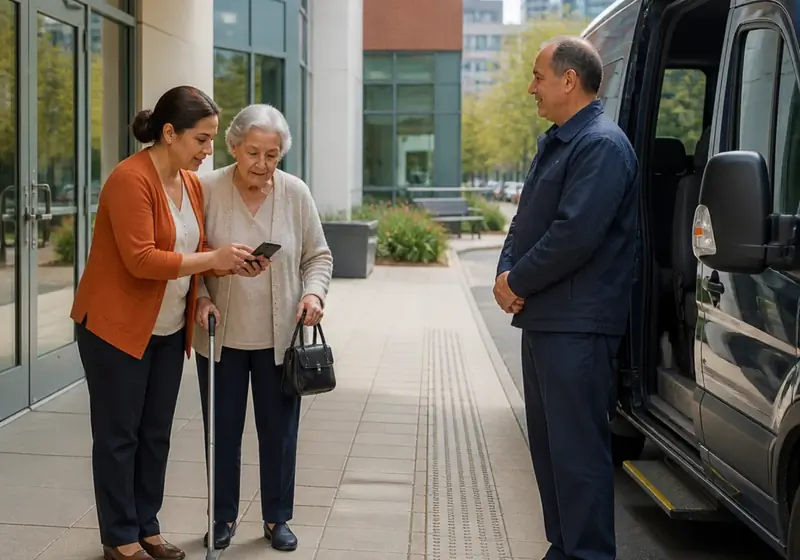
- Older adults who can walk with light assistance but no longer drive themselves to medical appointments.
- Wheelchair users who need a wheelchair-accessible van with a ramp or lift and securement — see our wheelchair-accessible transportation service.
- Patients whose mobility or assistance needs may not be met by an ordinary taxi or rideshare, after the appropriate ride type is confirmed.
- Caregivers and adult children coordinating a scheduled ride for a parent, including confirming who will meet the passenger at pickup and at the destination.
What to confirm before you reserve
- The appointment date, check-in time, full pickup address, and the entrance or department at the destination.
- Whether the passenger can transfer into a standard vehicle or needs to remain in a wheelchair or scooter.
- For a wheelchair or scooter, its type, approximate overall dimensions, and weight if known.
- Any boarding assistance, building access, or companion seating that needs to be confirmed.
- Whether the request is one-way or round-trip, and who will request a return if the appointment runs late.
- Who will pay for the trip. Ask the insurer or state program about eligibility and authorization; do not assume a private ride is covered.
Wheelchair vs. ambulatory: what's the difference?
Wheelchair transportation
AVI's wheelchair rides use vans with ramps or lifts and a securement system. A passenger may travel in their own wheelchair or scooter when the assigned vehicle can accommodate the passenger and device. Share the device type and dimensions with reservations to confirm fit. Learn more on our wheelchair-accessible transportation page.
Ambulatory transportation
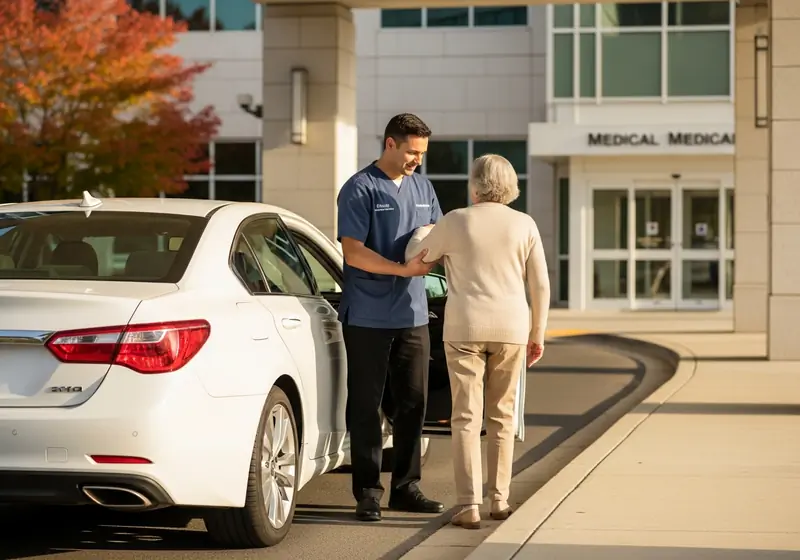
Ambulatory NEMT is for passengers who can walk, stand, and transfer in and out of a standard vehicle on their own or with light assistance from the driver. It is the right choice when you want a professional, comfortable medical ride instead of a rideshare, but you don't need a wheelchair-accessible vehicle. Read more about our ambulatory transportation service.
What to expect on an AVI ride
- You book the ride — online, by phone, or through a caregiver — at least 24 hours ahead when possible.
- Confirm the vehicle type, requested pickup window, and any access instructions with reservations.
- Arrange the level of boarding and drop-off assistance needed; building access can affect what is possible.
- Allow for traffic, check-in, and facility-specific entrance instructions.
- Confirm the return-trip plan when booking; timing and availability may depend on the appointment and schedule.
Where AVI provides NEMT in the Boston metro
AVI Transportation is based in Norwood. Its regular service area includes Boston, Cambridge, Brookline, Newton, Quincy, Norwood, Dedham, Needham, Westwood, Canton, and Milton. Call dispatch to confirm trips to other Massachusetts communities or a specific facility.
How to book a Boston-area NEMT ride
Schedule online or call reservations at +1 (857) 416-9394. For same-day questions, call dispatch at +1 (617) 237-6282. AVI recommends booking at least 24 hours ahead when possible, but availability is not guaranteed. Questions? Contact AVI before the requested trip.
Ready to schedule a ride?
AVI's regular service area includes Boston, Cambridge, Brookline, Newton, Quincy, Norwood, Dedham, Needham, Westwood, Canton, and Milton. Call AVI to confirm trips outside these communities.
Book a medical ride